


What if I sell you my fridge, but I get to keep it?
Written by me
No, it's, you just- No you don't understand,
You buy it now and then you get to sell it later when its value goes up.
So why wouldn't you buy?
You agree the value will go up right?
You have to see the value will go up.
The value will go up.
You're not spreading FUD are you?
If you spread FUD then you won't make it, and if you're not making it then you have too much FUD
We're all going to make it, aren't we?
Why hesitate?
Don't you want to make money?
Buying an NFT is a bad idea.
Buying an NFT in 2026 is a very bad idea.
I say this up top because I want to make it clear that I know NFTs are not good investments, generally predatory, and often outright scams. NFTs can and are used for harassment[1], for scamming[2], and many other gross schemes.
It is worth saying multiple times, buying an NFT is a very bad idea.
But… you could buy my NFT.
My NFT is the good kind.
PART 1 - What is an NFT?
NFT stands for non-fungible token. Lets see what we can glean from that
- Fungible is a very specific term in economics[3]. A thing is fungible if different versions of it are functionally the same. Money is fungible, because another dollar spends just as well as any other. Maybe some artifacts or special misprints are more or less valuable, but on the whole all dollars are worth $1.00 exactly. All unopened pringles cans can be exchanged for another one, and you'll pay the same price for it at Walmart. So, a non-fungible token would be a token that is unique.
- The term NFT is used often in computer contexts, here when we say token we mean a piece of computer code. Tokens are super important and make a lot of the web work together. Your browser has a collection of smaller tokens called cookies, that let websites remember who you are between visits. The auto log in system of your email, the shows on your watchlist, the progress of your online training module, and the two factor authentication systems many workplaces use are all tokens. So, a non-fungible token would be a unique piece of code that doesn't exist anywhere else.
Which sounds wonderful! The concept being implemented here is "strict uniqueness". All packs of notecards you buy from the store are uniquely a stack of notecards. They aren't chips, they aren't TV screens, they have a unique form and unique function. But *this* stack of notecards I have in my hand is the only stack of notecards with this doodle of a half bunny half dog thing I drew on it.
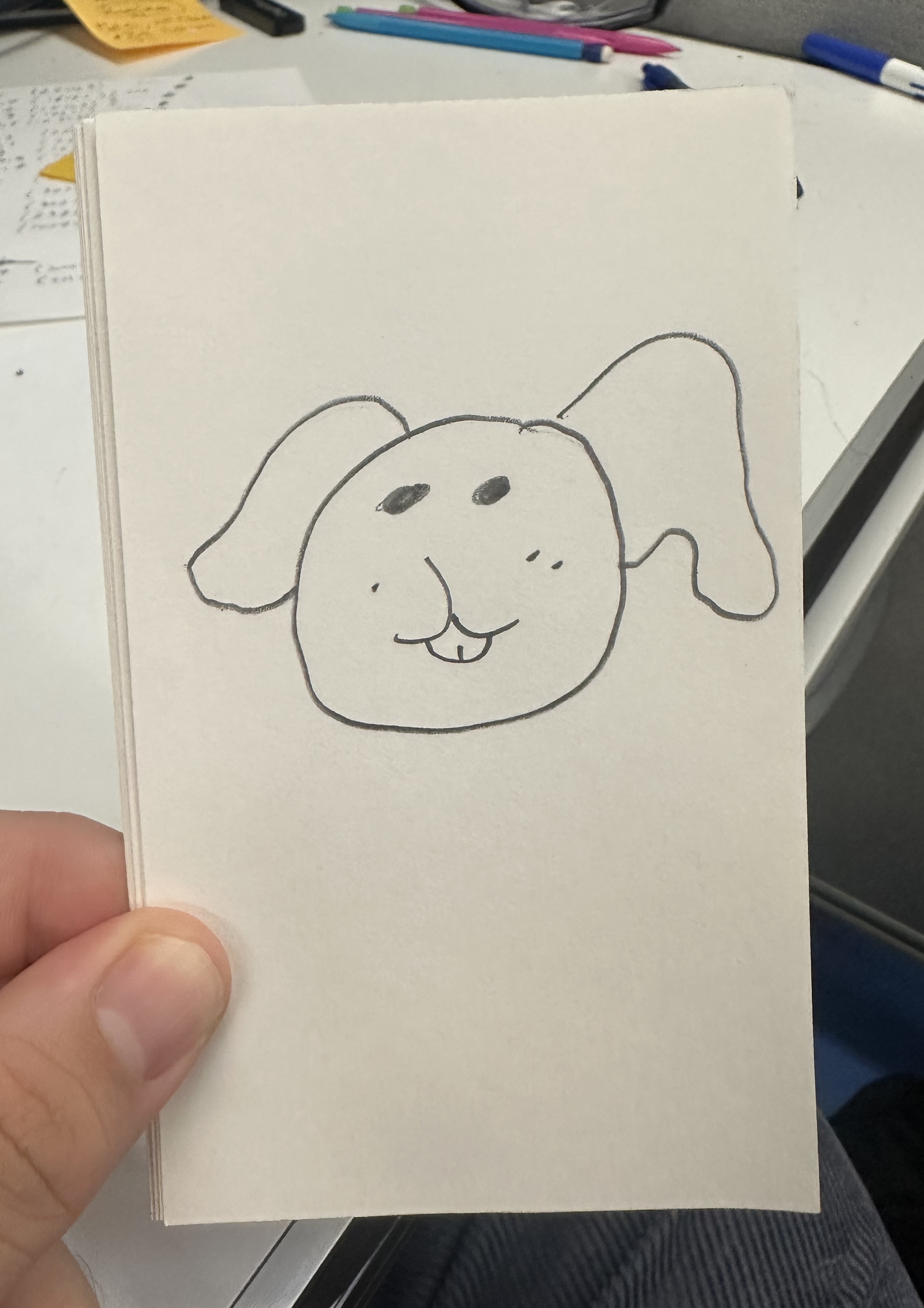
There are no other stack of notecards that have the strictly unique property of being *this* stack of notecards. A strictly unique piece of code would be cool for security and cryptographic programming, it could bring all the security of a front door key directly to all computational efforts.
Unfortunately, that's not what an NFT is. For one, the thing we’re describing is impossible, code is just math, and you can’t own a piece of math[4]. Over the years that NFTs have existed, many writers have done an excellent job explaining what NFTs actually are, but the short version is this: A NFT is a claim of ownership on a blockchain ledger that can be bought, sold, and transferred. What exactly you’re owning is ethereal.
It works the same as a stock[5], I “own 1 stock of apple” just means that the stock market exchange agrees that I have the right to 1 small part of the apple company.
- The people at Apple don't work for me
- I don't have any ownership over Apple's building, or any of their products
- However, when Apple succeeds it's good for me, the demand for my stock goes up, so the value of the stock goes up.[6]
The NFT is the same, a blockchain ledger records that I own a small "smart contract".[7]
- The creator of the NFT/smart contract does not work for me
- I have no ownership over any of the code (again, you can’t own a piece of math)
- I can’t hold or change the smart contract, I often can’t see code making up the smart contract However, there is a NFT market system that knows that I “own the NFT” and when people decide they want it, the value of the NFT goes up.
Usually the “smart contract” part includes a photo, but it doesn’t necessarily have to. Some NFT projects use them as game pieces, game currency, game characters etc. etc. The main limit is size, a smart contract has to be super small, about the size of a photo taken by a nice camera, so that's the most common usage.
I want to underline this point in particular: If anyone ever claims that you’re buying a piece of digital art when you buy an NFT, they are lying.[8] You are buying the right to claim ownership of that art, but the legitimacy of that claim is purely founded on the blockchain used to prescribe the ownership. Immediately we see the issues start to rise up, unlike stocks the same NFT can be traded on more than one blockchain[9]
- Any other blockchains will not acknowledge your purchase
- Anyone who doesn’t know what blockchain you're using will have no way to verify your purchase
- Anyone who specifically doesn’t like the blockchain you use will definitely not respect your ownership claim.
- Anyone at any time can take the photo you “own”, download it, and mint it on a different or even on the same blockchain, creating a second copy.
The NFT you have is unique, but not strictly unique, anyone can make a copy at any time, and theres nothing you can do to stop it.
So, NFTs are not exactly the cool art ownership tool they claim to be, but they are still an interesting system that have some stock-like properties, maybe there is something we can use it for. At the very least, it might be interesting for us to try to implement our own as a programming exercise. If I was going to make my own NFT I would need to
- Make a bunch of photos that can occupy our "smart contract"
- Go to a NFT exchange website, make an account and "mint" the NFT, making the first claim of ownership over the NFT
- Sell the NFT for profit
and honestly, thats a short list and not too hard. It takes a bit of research to avoid getting scammed during step 2, but steps 1 and 3 are trivial. The sticky part of NFTs is the connection to cryptocurrencies. NFT exchange websites don't use real money, they trade in crypto, so our real list of steps is
- Make a bunch of photos to occupy the smart contract part, 1 photo per NFT
- Go to a cryptocurrency blockchain and buy cryptocurrency
- Go to a NFT blockchain, make an account and mint the NFT, paying minting fees in crypto
- Sell the NFT to a willing buyer, making a profit in crypto, paying selling fees in crypto
- Cash out my crypto, paying taxes on any realized gains
I don’t want to spend money on this, and I really don’t want to buy or sell crypto. Crypto sucks.
PART 2 - Bitcoin
In 2008 the american economy functionally collasped in on itself. We won't dig into the whole story here, there are plenty of movies[10], books[11] and blogs outlining the major players and exactly what happened, but we'll recap the basics
- The bank invented a financial instrument called a mortgatge backed security, we'll call it a bond[12]. Since a mortgage involve paying back a large amount of money for potentally decades, and involves a person's home, banks considered mortgages safe money makers, you can expect almost all homeowners to pay. As a result, the bond is a very safe investment and some regulatory agencies[14] put their stamp of approval on it.
- Over the years, lots of accounts such as social security, 401Ks, and IRAs made it the backbone of their investments and quietly the whole economy relied on these bonds going up in value.
- The banks realized that they made more money on the bond per home buyer than they made on the mortgage that home buyer was paying, so they made it really easy to buy a home and really easy to get a business loan to build a home. The result was more supply and more demand, so the bank made more money, but speculative home buyers decided to snap up a lot of the homes on the market.
- The result was counter-intuitive, more supply should be driving competition up and the price down, but instead more supply encouraged more speculative buying, which drove the price up which encouraged more speculative buying, which drove the price up which encouraged more speculative buying. The whole thing was a bubble, and when the teaser rates[15] on these homes expired
- The bubble popped. Both legitimate and speculative buyers defaulted on their loans, so the mortgages were worthless, so the bonds failed, so all the people who invested in the super safe bonds lost all their money, and the whole thing cascaded into economic free fall.
In the fall out many political movements were born or strengthened including the anti-capitalists, the hyper-capitalists and Occupy Wall Street, all recognizing the same problem: The American people got screwed by the banking system. However, the different movements prescribed different solutions to this problem, in particular the hyper-capitalists set the problem at the feet of the regulators. Their claim was that the regulations failed, it was them who marked all the bonds as super super safe investments, which encouraged the whole economy to rely on them as super safe investments and when the regulators were revealed to be wrong the economy collapsed. The solution is simple, less or no regulation. This is the inspiration behind cryptocurrency, the economy would work better without the government interfering or regulating it. In a quick paragraph, you can see the appeal: Cryptocurrency is a currency, just like many others but
- - It’s immune to governments inflating the currency, either on purpose or by accident
- - It never relies on the government or a bank to keep records of things, as long as the internet remains functional your money is still accessible, even in an apocalypse
- - Since everything is completely digital, there is much faster transaction speeds, much lower transaction costs, and much stronger security[16]
- - You can be completely anonymous[17] during the whole process
Unfortunately, when you think about it for more than a minute, this is actually a stupid idea
- - Governments aren’t the main source of inflation[18], inflation occurs when demand outpaces supply or when production costs drive up prices
- - Governments and banks are extremely reliable sources of records of things, and any apocalypse that takes out the world governments would also take out the internet[19], destroying all cryptocurrency
- - Being anonymous is not a real benefit most of the time, it just makes scams easier to do over the internet. Any benefit of being anonymous is replicated by using cash.
In reality, bitcoin was designed to make rich people more money. The largest holders of bitcoin and the biggest profitters are the same old money people who made money in the 2008 housing crash. Bitcoin was pitched as the solution for the little homeowner screwed over in 2008, but the main benefactors are the ones who made money in 2008 that they could roll over into bitcoin. Furthermore, the advantages are designed to compound
Bitcoin is a large decentralized read-only ledger.
We can imagine a much simpler implementation between friends. Consider my roommates from college: Me, Nick, Ian, and Olivia go shopping for groceries every weekend, we get food and pay for each other, and often make 5 and 10 dollar bets. It gets cumbersome and kinda silly to exchange money over and over again, so we put together an IOU ledger.[20]The system is simple, I buy Ian taco bell, and just jot down how much he owes me. Nick covers the grocery run for everyone, and adds up how much we all owe him and jots it down. Olivia bets on and loses mario party (again)[21], and owes Nick 5$, so she jots it down. At the end of month (usually when rent comes around), we check everyone's totals and square up with Venmo or cash. This saves a lot of hassle, instead of paying Ian 5$, then Ian paying me 5$, then me paying Ian 5$, then Ian paying me 5$, we just see that we’re even, and move on.
Obviously this only worked because all 4 of us trust each other, and could trust the IOU on the shared note document was “as good as real money”. If we want to make this system work with strangers, we need to add a few features. We already know[22] how to implement a signature system, which can be used to ensure that all the transactions are legitimate.[23] This technology has been used for unpopular digital currencies for decades, and is the same technology that lets you send emails. The difference is that bitcoin implements a decentralized ledger, everyone has a copy of the “shared note document” and all the copies are kept in sync.
The syncing system is pretty simple, when I want to give you a bitcoin I just announce to all other users that I’m giving you a bitcoin and everyone writes it down. We all agree to only write down a transaction if it's correctly signed, and never write down a transaction that would send someone’s balance into the negatives. So how do we make sure that everyone is writing down all the transactions correctly? It's easy to imagine that I simply choose to erase some of my friends' announcements and insist to everyone else that they have more bitcoin than they really do, or that some glitch causes me to miss a transaction or screw up copying someone’s signature. Bitcoin implements a system called proof of work: Given a block of pending transactions, calculate[24] the extra block signature that would be needed to make a hash function output zero.[25]This process is designed to be hard to work out, but once someone suggests an answer it's super easy to verify it's correct with your own copy of the ledger. As a reward for their calculation everyone agrees to add a free “solver gets 1 free bitcoin from the ether” transaction. Then, everyone agrees to only use the version of the chain with the longest history. This system would seem to work well, the hash outputs keep everyone in sync, and if I wanted to create a fake block, I’d be able to set one up, but then I’d have to calculate the next one, and the next one, and the next one, doing all the calculations alone since my fake block has poisoned all the future blocks. The result is a race, I have to calculate faster than everyone else to keep my lie up, if one real chain user beats me, their chain of longer history supersedes mine and I lose my fake blocks.
But when implemented in the real world, we hit issues! It's not impossible for a bad actor to keep up their lie with enough computing power, so the hash function needs to scale with the computing power being used. This created diminishing returns on upgrading your computer, but diminishing returns are still returns, so an arms race started and warehouses of server racks have been plucking away at calculations ever since, causing gigantic energy draws and tons of waste. Additionally, because it's basically impossible to undo a transaction after two or three blocks get stacked on top of it, anytime someone gets scammed its permanent and unfixable… unless you have a bunch of money
Bitcoin has experienced 6 major splits, causing two groups of calculators to believe they had the “real” copy of the ledger. This has resulted in Bitcoin, Bitcoin Cash, Bitcoin Gold, Bitcoin Satoshi Version, eCash, Bitcoin Unlimited and Bitcoin classic. Etherium, a major bitcoin competitor, has the same problem, in 2016 a huge hack took a bunch of money from some powerful actors, so the powerful actors said “screw this, roll back the chain or we walk” and everyone just complied, because the alternative is all of Etherium block hashes getting way more expensive and complicated, and the few hold outs now trade on their own chain called Etherium Classic.
The result is very straightforward: when centralized oversight is removed, justice and protection are only available to the wealthy elite with the power to bully other people into playing by their rules. The whole system of crypto is designed to fix a bunch of things which are not problems, so that wealthy elites can make a bunch of money from suckers buying in. The only way to have any say in the system is to be deeply invested, and that ship sailed back in 2013. The whole thing reeks of scams and unaccountable financial loopholes designed to screw over home buyers in 2008, because that's basically the thing it was designed to do.
At first it seems odd that all NFTs require the purchase of crypto, why not just use normal banks if crypto sucks so bad. But now we see the problem from the other side: NFTs were invented to get you to buy crypto. The one hitch in the whole crypto scam is liquidity, at some point I need to turn my coins back into real money, and the only mechanism to do that requires another human on the other end to exchange their real money for my crypto. So bitcoin investors needed to drum up a bunch of demand, ideally both legitimate and synthetic. The idea was to create a bubble, but never let the bubble pop, so they attached images to blocks instead of digital currency and forced the buying/selling of digital currency[26] and now bitcoin is worth $80,000. The high price spikes get news attention creating synthetic demand, and the NFTs create legitimate demand, ensuring money is always flowing in so the richest bitcoin owners can always cash out. The idea that NFTs are the same thing as digital art ownership gets news attention, creates synthetic demand, and the art creates legitimate demand, ensuring money is always flowing in. The bored yacht ape club says they might make an animation of their apes soon, which gets news attention, create synthetic demand, ensuring money is always flowing in.
So since every NFT market would require me to buy crypto currency, I guess our adventure into the NFT space is over… Unless…
We’re already writing the code for the NFTs, why not write the code for a blockchain? If I was going to make my own blockchain then we can make a super small cryptocurrency (call it Billiams), we can remove all the bad scam parts. I would just need to
- Design a read-only database that supports—
Wait, why use a blockchain? The NFTs being attached to crypto in the first place is stupid, if I was going to build my own NFT, I simply would use cash or venmo.
If we don’t use a cryptocurrency, then we already know the steps to building an NFT are
- Make a bunch of photos that can occupy our "smart contract"
- Make the first claim of ownership over the NFT (for instance, you could write a blog article announcing the creation of NFTs, then get sidetracked researching bitcoin, and end up writing a much longer ramble about the 2008 market crash)
- Profit?
All of this is very very doable… So I did it!
PART 3 - You can buy my NFT
You can buy an NFT right now, right this second.
We have lots of NFTs to offer!
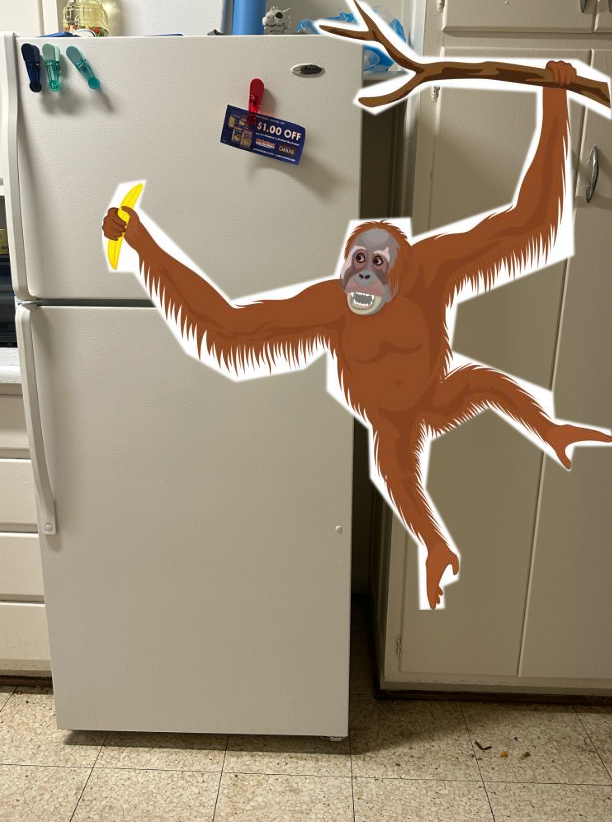
#1 - Monkey takes banana (in color 2026)
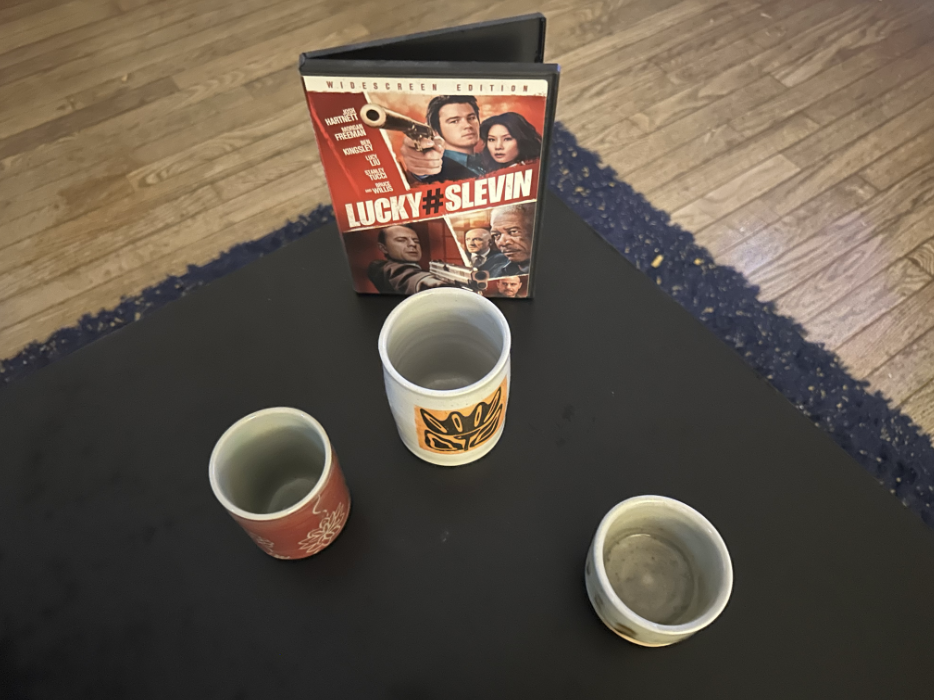
#2 - Lucky number S7evin (with director's commentary)

#3 - Fungible Pringles Can at Walmart
#4 - Bunny-dog (Lead on paper canvas)

#5 - One Hundred Percent Very Original Ape OCs Don’t Steal
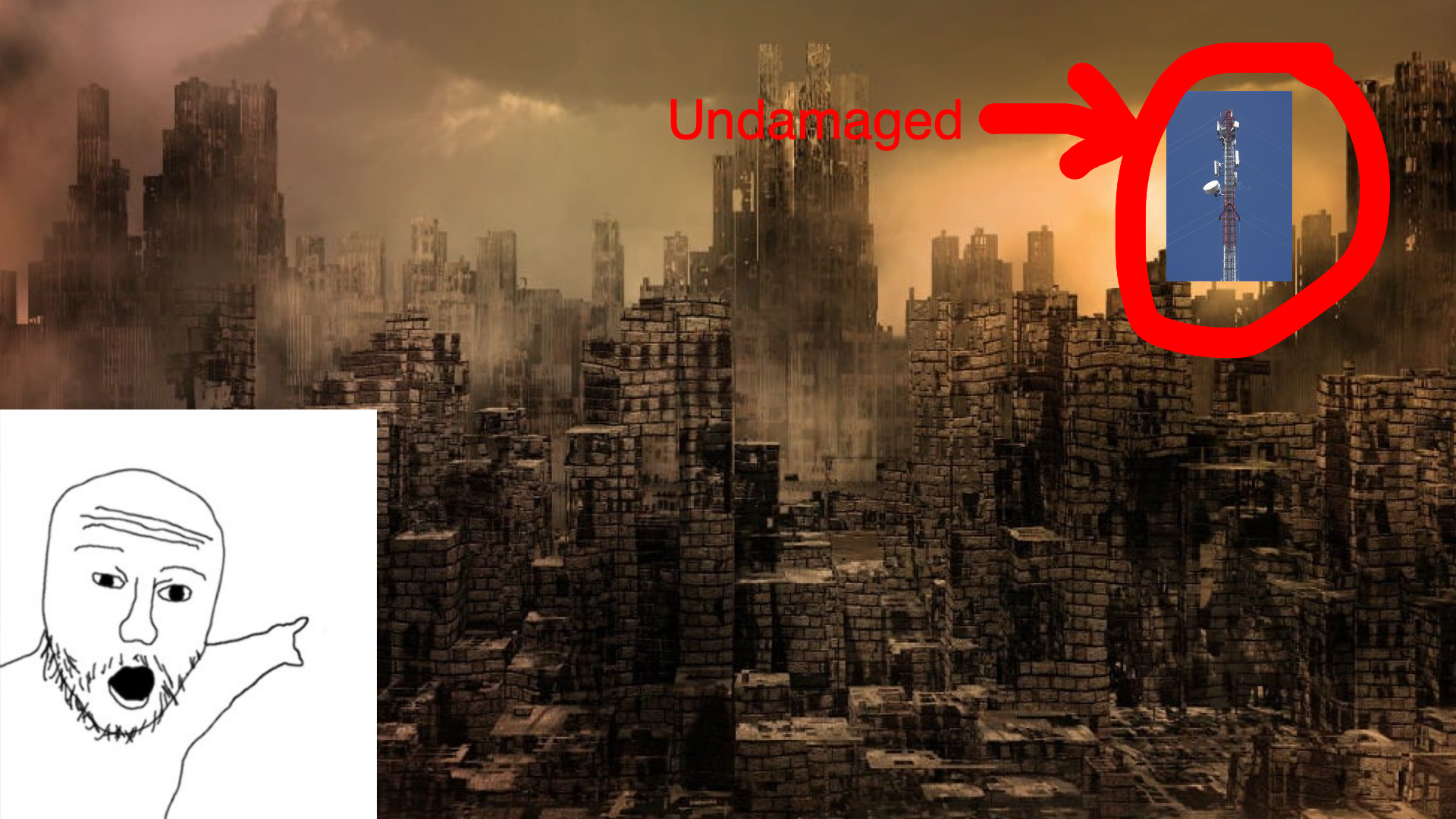
#6 - Ideal Bitcoin use case
All NFT start at 1$ or best offer. Email your purchase order to williamashcraft112@gmail.com, and include NFT somewhere in the subject line and we’ll get your purchase underway.
You can download the code used to run the chain on your own computer, it's all open source on my github here. Of course, your chain won’t have any of the purchases on it, since actually decentralizing the chain would create the same arms race that bitcoin experiences. In fact, your copy of the chain is less legitimate than my version of the chain. Because I say it is.
PART 4 - Isn’t this system awesome, I have full power and you send me money
At this point we see the flaws of such a system quite clearly. When you remove all the scam inducing elements of the blockchain, and NFT system, what you’re left with is a text document on a macbook that some stranger owns. In fact, even with so many scam elements removed, the person with the most authority over the chain (me) still has overwhelming amounts of control, and if we really did try to use this system as intended then I would be the only one with any ability to receive justice, since I have control over the chain. In retrospect, you probably shouldn't buy from me, because I will scam you, its the only way that the system can possibly function.
In retrospect the reason for such a system is quite obvious, the hyper-capatilists don’t want to fix the system, they want to get in on the profits.
The problem with the 2008 market crash was that you had to be well connected in 2007 to get in on the profit and now in 2026 it's too late.
So business assholes and programming goons teamed up to recreate an environment with all the same structure, so they could make some money, they called it NFTs. But the problem with NFT scams in 2017 was that you had to be well connected in 2016 to get in on the profits and now in 2026 it's too late.
So business assholes and redditors teamed up to recreate an environment with all the same structure so they could make some money, they called it meme stocks in 2021. Of course the problem with $GME and $BBY meme stock pump and dump scams in 2021 is that you had to be well connected in 2020 to get in on the profits and now in 2026 it's too late.
There will be more, there will always be more. In part 2, I mentioned that the hyper-capitalists set the problem at the feet of the regulators. They were wrong. The problem is human greed. There will always be some business asshole who looks at the system we have and they’ll say “That was great and let me steal a bunch of money from idiots. Let's do it again”. The only way to stop this cycle is to end the greed
So what do we do about it?
It's tough for me to have an answer.
All the scams have one thing in common, they don’t work if we recognize them as scams. Their bitcoin is worthless unless they can sell it to someone. Their NFT is worthless unless they can sell it to someone. Their stocks are worthless unless they can sell it to someone. Its not just about not getting tricked, if you don't get tricked then you also contrubute to protecting everyone else. That's why all the systems are tied up in futuristic deterministic language.
“Get in on Bitcoin, because it's the future of currency” [27]
“Get in on NFTs, because it's the future of digital art” [28]
“Get in on meme stocks and short squeezes because it's the future of finance" [29]
“Get in on AI because it's the future of everything” [30]
They must convince you that it is inevitable, that it is the future, because if it’s not the future, then it's just a text document on some stranger’s macbook. If you don’t believe in it, it becomes worthless. Bitcoin only shot up in price because everyone bought in. Some NFTs only shot up in price because everyone bought in, and others didn’t because they got swept under the popular ones. Meme stocks only shot up in price because everyone opened short positions after reading reddit advice, and when the positions started closing up the price dropped back down. AI only shot up in IPO evaluations because businesses are choosing to treat them like they could possibly be really alive one day.
So they pitch you like salesmen, they warm up to you like they’re your best friends just offering some general financial advice. For your sake, not for theirs.
They love their hot potato, they mention it all the time.
They tweet about their potato,
they talk to friends about their potato
and borrow money from their families to invest in more hot potatoes.
And you dear reader, yes you dear reader could catch the hot potato right now!
Limited time only, don’t you want to catch it?
Potatoes are the future, they are inevitable.
You know ready player 1?
You know cyberpunk?
It’ll be just like that, everyone is holding a hot potato in the future,
so you might as well get in on it now!
I’m here to help you,
to get you in on the ground level,
to give you the most important thing in the universe!
to gift you the most valuable thing in the universe!
A steaming hot potato!
But of course you can’t trust anything they say
Because they’re holding a hot potato
They will say anything it takes to make sure you catch it next.
I don’t know what bullshit they will come up with, what future sounding techno scheme will capture the zeitgeist tomorrow
Please, do not catch the potato.
[1] https://blog.mollywhite.net/abuse-and-harassment-on-the-blockchain/
[2] https://www.artsyshark.com/2023/09/20/dont-fall-for-nft-scams/
[3] Well, to be fair, fungible is a specific term in every context.
[4] Actually you sort of can... kinda. This is still a pretty legal grey area, but Texas Instruments, Intel, and Valve have all tried to claim ownership over numbers (in 2009, 2010 and 2013 respectively), but no legal actions past DMCA claims have been taken.
[5] No of course its not the same, but both NFTs and stocks are trying to achieve the same goal. The differnce is in implementation, stocks are legal claims over a company expressed via a chain of benificial owership across computer database entries representing tangible certificates owned by central depositories and held for the benifit of a buyer, and NFTs are pesudonomous claims over a smart contract function expressed on a blockchain network made of strangers, with a picture of a monkey stapled to the front. So basically the same thing.
[6] Its worth being careful about correlation and causation. Many different things can make the stock value go up and down, the success of the company is just one of many factors. Furthermore, what exactly success means for a company is totally a matter of opinion, and possibly quite circular. The company is successful when the price goes up and the price goes up with the company is successful. In fact, its precisely these unintuitive notions of value and demand which give NFTs their toxic functionally. Whatever you believe becomes true, unless you beleive too hard.
[7] What a stupid name for this. A smart contract is a piece of code. Thats basically it. What a stupid name. The intention is that the code represents an contractual agreement and implements the funcions of that agreement automatically, but there is nothing actually forcing that to happen, a smart contract is allowed to be any piece of code.
[8] Here are some lies: https://nca.org/article/nfts
[9] Technically, kinda sorta, a single company actually can trade their strictly unique stock on more than 1 stock exchange. This is called investor fraud.
[10] https://www.imdb.com/list/ls069378252/
[11] https://blogs.darden.virginia.edu/brunerblog/2018/12/the-financial-crisis-of-2008-a-review-of-notable-books/
[12] This is pretty misleading, but technically true and clearner for the story we want to tell. the truth is that mortgage backed securities are only one of many kinds of bonds, and banks have been using them since the 18th century. Mortgages weren't used to buy homes originally, they were used to buy slaves, then when slavery became illegal mortgages moved to farmland and railroad plots. Once manifest destinty started to phase out at the turn of the centry mortgagages got conntected to normal homes, but as part of the new deal the Glass-Steagall Act[13] was passed to----- Actually, no, sorry, we're bearly in 1940 and this is just the start of the story, we don't have time. It is technically correct to say "The bank invented a financial instrument called a mortgatge backed security, we'll call it a bond".
[13] Ok actually, the Glass-Steagall Act is pretty interesing, we have a little time. Back in 1933, we had a solution to the problem that kills the economy in 2008! The banks issuing the mortgages were required to stay seprate from the banks betting on bonds, so step 3 of our story never would have happened. In 1970, Richard Nixon (of course it was Nixon) undid Glass-Steagall by splitting Fannie Mae into Freddie Mac and Ginnie Mae (sorry, no time to explain this one), so the banks got to bet on the bonds they issued and all of a sudden inflating demand could make them a lot of money.
[14] This is worth untangling. The hyper-captalist argument will later argue that the regulatory agencies are to blame, and that we need less government, but this argument is wrong, the regulatory agencies were private companies. In the aftermath the agencies will use a 1st amendment defense and the courts will agree, it was no secret these rating were just opinions of economic experts, and not governmental stamps of approval.
[15] Oh yeah I didn't even mention teaser rates. The banks saw the money printing machiene slowing down, because legitimate buyers only need 1 home. Each bond is a package of ~1000 mortgages, so unless you have a constant stream of new homeowners the whole thing stops working. As a plot to encourage more buyers, banks offered adjustable rate mortgages with teaser rates, for the first 6-8 you don't have to pay interest and after that the interest rate gets updated to reflect the market. So when one homeowner defaults on their loan, the bank just raised rates to correct. As a result, when the bubble popped it pushed up the rates for everyone else, creating a bubble inside the popping bubble. This was enough to kick start everything into chaos, but to be fair, the bubble was going to pop at some point no matter what
[16] This is often a key part of the pitch, but is in fact, lies. In principal, if the number of people using a cryptocurrency is small then all 3 of these things are true, but as more people make transactions all 3 become false as hash calculations scale up with computing power. This creates an interesting tension, the bitcoin only works efficency if no one uses it, but the bitcoin is only valuable if everyone wants to use it. Imagine a bank where you can only can send money to other people who use the same bank, but the more people use it the slower the app loads, congrats you've reinvented bitcoin.
[17] Not anonymous, pseudonomous, and even thats kinda shaky. Once you know the identity of someone from one transaction, all their future transactions are public to you. Famously we know the wallet IDs and balances of a handful of celebrities, and news outlets have been happy to share their findings.
[18] Trump desperately is working to be an exception to this rule (https://www.cnbc.com/2026/10/08/inflation-tariffs-trump-fed-consumer-goods.html), the 2025 tariffs exploded production costs and drove inflation way past expectations. However, when bitcoin was invented in 2008, this statement was true.
[19] This is probably true... the internet is run by a pretty complex international web of organizations, and would be directly resistant to government destruction. The problem is power, you need a laptop and for many of the complex international organizations to be up and running, which is probably hard to coordinate in the apocalypse. At the very least, its hard to imagine an apocalypse scenario where the government collapses but you still have your crypto
[20] This is a true story, did you know apple notes can be attached to a group chat? Its super helpful, everyone gets updates in their notes app automatically
[21] This is not a true story, Olivia is very good at mario party. Mario party is actually not luck based at all, its a game of skill
[22] Obviously, I have no idea how this works, but someone who does computer security would know. However, the basics are pretty easy, we can make the prime factors of a large number as a password to how data gets shuffled around. If you know the factors, great you can unscramble the data (and in this case, that means you can write down your signature). If you don't know the factors, then you can't make the signature, but if you know the large number then you can verify a signature's authenticity. The whole thing is mixed with modular arithmetic, and the transaction ID can be part of the scrambling/unscrambling algorithm so that none of these numbers can be reverse engineered.
[23] Legitimate is a tricky term here, scams can and do still happen, but they're the normal "I clicked on the weird link and it took my password" kinds of scams. A transaction is automatically legitimate if it comes from your account, regardless of who actually is controlling your account. The point here is that we can use the cryptographic signature system to stop other accounts from adding to the ledger on your behalf.
[24] Calculate is a poor term here, the best strategy is just to guess and check.
[25] Hash functions are just functions that take in a group of transactions and output a very big number. The function is designed to be super chaotic, one transaction slightly changed gets a totally different output, and to be hard to reverse, so someone trying to add a fake transaction into a block will have to calculate a totally different hash output from scratch.
[26] The most interesting case of this was squid-coin, an NFT themed around the netflix show Squid Game. In order to buy squid-coin, just put your card info in no problem, but in order to trade or sell your squid-coin you have to also use a number of marbles (from Squid Game episode 6). So the creators got to sell early investors ~3.3 million dollars of squid-coins... and then.. just never gave out the marble tokens. The investors literally couldn't do anything, the blockchain stopped them from getting any sort of justice or protections, because the creators are following all the rules they created! This is the key design philosophy of crypto: The problem with all the rules, is that the rules require a human to execute them, we should make them automatic. The fact that this gives rule makers all the power is lost on the crypto bro.
[27] https://www.flatworldsolutions.com/IT-services/articles/bitcoin-cryptocurrency-future-money.php
[28] https://www.cbsnews.com/news/nft-art-environmental-costs/
[29] https://www.nerdwallet.com/investing/learn/meme-stocks, and https://www.reddit.com/r/GME/
[30] https://professional.dce.harvard.edu/blog/whats-the-future-of-ai-in-business/. For the record, no AI was used the writing of this post, or in the creation of the NFT images.
No, I think its good that a quarter of the word count is my footnotes, why do you ask?